
A common misconception in DeFi is that connecting a wallet to an application is the main security decision. Usually, it is not. The more consequential choice often comes one step later, when a token approval gives a contract permission to spend assets. That permission can remain active after a swap is finished, even when the user has forgotten which site received it.
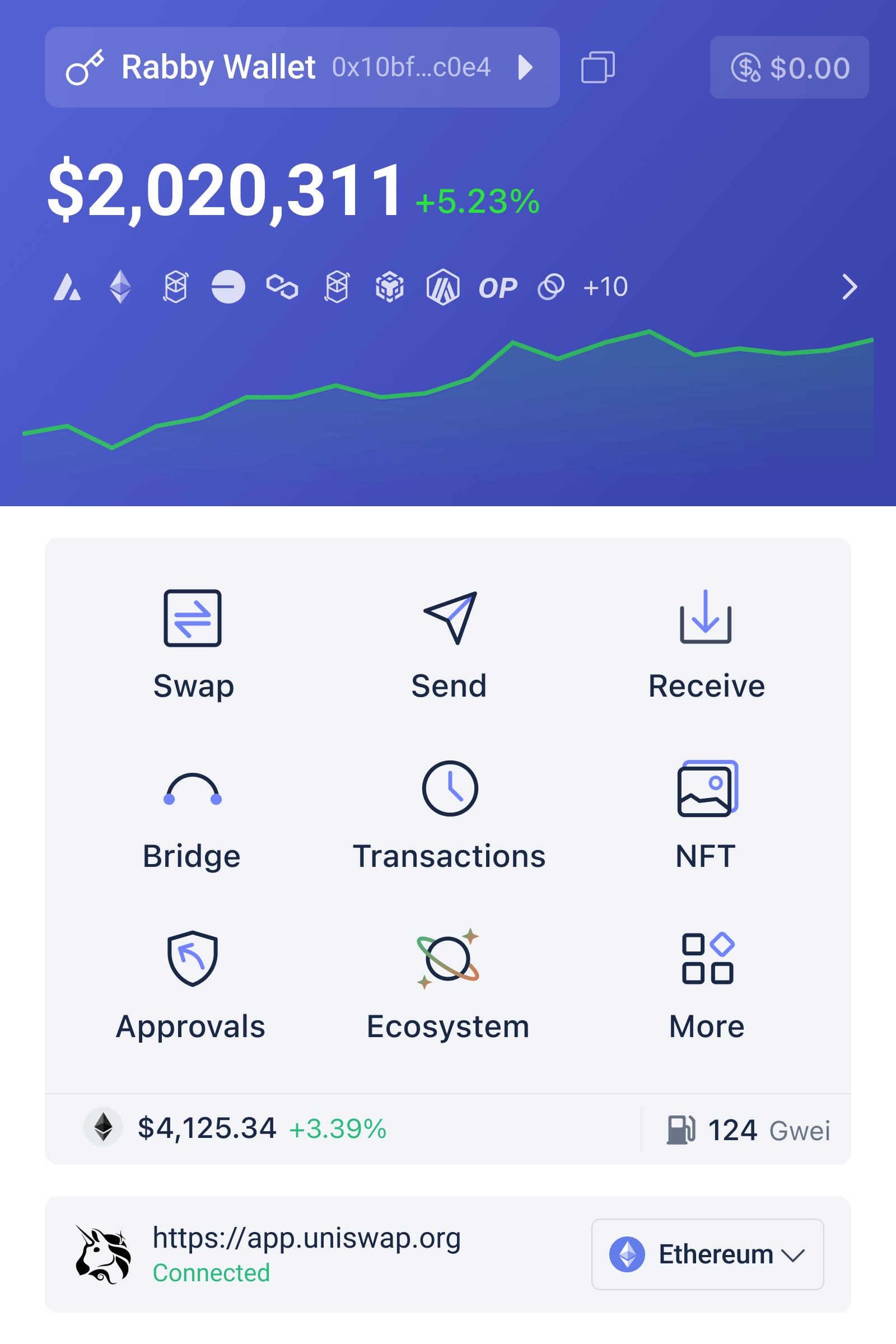
This distinction matters especially for users moving assets across networks. A cross-chain swap may involve a token contract, a bridge or liquidity protocol, a destination-chain transaction, and several separate approvals. Rabby is designed for Ethereum and EVM-compatible networks, and its value is best understood not as a magic safety layer but as an interface for inspecting transaction intent, approvals, and network context before signing. The recent positioning of Rabby as a wallet for Ethereum and all EVM chains reflects that broader use case, but the underlying risks still depend on user decisions and contract behavior.
Why token approvals became a DeFi security problem
In a simple cryptocurrency transfer, the wallet owner authorizes a transaction that sends a specified amount to a specified address. Token approvals work differently. Most fungible tokens on EVM networks follow a standard in which the holder authorizes a smart contract to spend tokens on the holder’s behalf. A decentralized exchange can then pull the approved amount when executing a trade, rather than requiring a new direct transfer instruction for every interaction.
That design is convenient, but it introduces a lasting permission. An approval is not necessarily limited to one transaction, one day, or one swap. It may authorize a precise amount, or it may allow a contract to spend an effectively unlimited amount. If the contract is compromised, malicious, incorrectly configured, or later upgraded in a dangerous way, an old approval can become relevant again.
The practical lesson is subtle: wallet security is not only about protecting a private key. It is also about managing delegated authority. A user may never reveal the seed phrase and still expose funds through an approval that is broader or longer-lived than intended. This is why approval management deserves separate attention from the familiar advice to verify a website and protect recovery credentials.
Cross-chain swaps multiply the places where judgment is required
A cross-chain swap is not one universal operation. Depending on the route, it may combine a source-chain swap, a bridge transfer, a liquidity-provider mechanism, a message-passing step, and a destination-chain conversion. The user may see a clean “swap” button, while the underlying process involves multiple contracts and differing assumptions about finality, token representations, fees, and supported networks.
That complexity creates a comparison between two broad approaches. A user can rely on a specialized cross-chain interface that abstracts most of the route, or manually assemble the process using separate decentralized exchanges and bridging tools. Abstraction is faster and often easier to use. Manual execution can provide more control, but it also increases the chance of selecting the wrong network, approving the wrong token, or overlooking a contract interaction.
Neither approach eliminates trust. In an abstracted route, the user places more trust in the interface, routing logic, and connected contracts. In a manual route, the user takes on more operational responsibility. A wallet such as Rabby can help expose transaction details and network information, but it cannot guarantee that every protocol, bridge, token, or route is economically sound or technically safe.
For US users, there is an additional practical consideration: a displayed dollar value is not the same as guaranteed execution value. Gas costs, bridge fees, slippage, liquidity conditions, and possible tax-reporting implications can affect the result. A route that looks cheaper in a browser window may be less attractive once the complete transaction sequence is considered.
Rabby compared with a basic browser wallet
A basic browser wallet often focuses on account access, network selection, and transaction signing. That can be enough for straightforward transfers. Rabby’s differentiating idea is a more inspection-oriented signing experience: before the user confirms, the wallet attempts to make the transaction’s likely effects easier to understand, including asset changes, contract interactions, and approval-related risks.
The trade-off is that more information is not automatically the same as perfect information. Transaction simulation and risk signals depend on the wallet’s ability to interpret contract behavior and available data. Complex protocols, unusual tokens, newly deployed contracts, and rapidly changing conditions can produce incomplete or uncertain results. A warning should be treated seriously, but the absence of a warning should not be treated as proof of safety.
Installation is therefore only the beginning. Users who want the rabby extension download should obtain the extension through a source they have independently verified, confirm the publisher and browser details, and avoid importing a recovery phrase into an unfamiliar page. A genuine wallet extension will never need a website to “unlock” funds by requesting a secret recovery phrase in an ordinary support flow.
A reusable framework for reviewing approvals
Before signing, separate the transaction into three questions. First, what asset is leaving the wallet now? Second, what permission is being granted for later use? Third, what must be true for the intended result to occur? This framework prevents a frequent mistake: evaluating only the immediate swap amount while ignoring a separate unlimited approval.
For a routine trade, a limited approval can reduce the amount exposed if the contract is later abused, although it may require another approval when the allowance runs out. An unlimited approval is more convenient and may reduce repeated gas costs, but it creates a larger residual permission. The right choice depends on how often the protocol is used, how much value is held in the wallet, and whether the user is comfortable maintaining an approval inventory.
It is also useful to distinguish revoking an approval from undoing a transaction. Revoking changes a contract’s future ability to spend a token; it does not reverse a transfer that has already occurred. Revocation itself is an on-chain transaction, so it requires gas on the relevant network. If a wallet contains approvals across several chains, reviewing them is a portfolio-management task rather than a one-time cleanup exercise.
When convenience is reasonable
Keeping an approval can be rational when a user frequently interacts with a well-understood protocol, the approved amount is limited, and the wallet holds only the funds needed for that activity. Separating long-term holdings from an active DeFi wallet can further reduce the consequences of a bad approval or compromised application.
When caution should dominate
Revocation or tighter limits deserve priority when a protocol is no longer used, a token has unusual behavior, an approval is far larger than the intended trade, or a site requests permissions that do not match the stated action. A cross-chain route involving a new or unfamiliar contract should be treated as a higher-uncertainty transaction, even if the interface looks polished.
What Rabby can improve—and what it cannot solve
A clearer wallet interface can reduce cognitive errors. It may help users notice that they are switching networks, approving a token rather than merely swapping it, or receiving a different asset representation than expected. That is meaningful because many losses arise from misunderstood permissions and rushed signing, not from advanced cryptography failing.
Still, the boundary is important. A wallet cannot make a bridge solvent, turn an illiquid token into a liquid one, or guarantee that an economic incentive will remain stable. It cannot fully resolve governance risk, oracle failures, chain reorganizations, phishing outside the wallet interface, or losses caused by a stolen recovery phrase. Users should also question tokens that share familiar names with established assets; a recognizable ticker is not proof of authenticity.
The most defensible security model is layered. Use a hardware wallet or separate account for larger holdings where appropriate, keep active DeFi balances limited, verify the domain and network, inspect approvals, read the final wallet summary, and treat unexpected signatures as a stop signal. These habits may feel slower than clicking through a route, but they address different failure modes rather than relying on one product feature.
What to watch as EVM activity becomes more interconnected
If cross-chain interfaces continue to make multi-step transactions feel like single actions, wallet review screens will become more important, not less. The likely pressure point is explanation: users will need to understand not only which chain they are on, but also which permissions persist after the visible action ends.
A useful signal to monitor is whether wallets improve the separation between “transaction result” and “future authority.” Another is whether protocols make limited approvals, clear spender identification, and easy revocation practical without imposing excessive cost. These developments could reduce routine risk, but they would not remove the need for independent judgment. The underlying contracts and incentives remain decisive.
Frequently asked questions
Does connecting Rabby to a DeFi site give that site access to my funds?
Connection usually lets the site view public wallet information and request transactions. Spending authority generally requires a separate token approval or signature. Review each request carefully, because approving a contract can create an ongoing permission that outlasts the current visit.
Should I always revoke token approvals after a swap?
Not necessarily. Revoking can reduce residual exposure, but it costs network gas and may be inconvenient for protocols you use regularly. Consider revoking unused or unnecessarily broad approvals, while recognizing that a revocation does not undo transfers already completed.
Is a cross-chain swap safer when Rabby shows no warning?
No. A clean review is useful evidence, not a guarantee. Simulation and risk detection can be incomplete for new, complex, or unusual contracts. Confirm the route, token, network, fees, and requested permissions independently before signing.
The sharper mental model is simple: a DeFi wallet is not merely a place where assets sit. It is also a control panel for permissions distributed across contracts and chains. Rabby can make those permissions easier to inspect, while disciplined approval management limits what happens when an application, route, or assumption fails. That combination—not a download alone—is what turns cross-chain convenience into a more manageable risk.
Comments (0)