
A common misconception is that disconnecting a decentralized application, or dapp, revokes its access to your tokens. It does not. In most cases, the connection only gives a website a way to request transactions from your wallet; a token approval is a separate permission recorded by a smart contract. That distinction matters because an old approval can remain active after a farming campaign ends, a website disappears, or a wallet changes networks.
For DeFi users in the United States, token approvals are best understood as standing permissions rather than simple login credentials. They can make repeated swaps, deposits, and withdrawals convenient, but they also expand the consequences of interacting with a compromised or malicious contract. A multi-chain wallet such as Rabby can make this risk easier to inspect, yet no interface can eliminate the need for judgment. The practical question is not whether approvals are good or bad. It is which management method fits the value, frequency, and complexity of your activity.
What a Token Approval Actually Does
Many ERC-20-style tokens use an allowance mechanism. When you approve a protocol contract to spend a token, the token contract records an amount associated with your wallet address and the approved spender. Later, the spender may call a transfer function within the rules of that allowance. The dapp does not normally hold the permission in your browser; the permission lives on-chain.
This creates an important mental model: approval management is closer to managing delegated authority than to clearing browser history. Disconnecting a wallet from a dapp may stop the website from communicating with your wallet, but it generally does not change the allowance already stored by the token contract. Revocation requires another on-chain transaction, and that transaction usually requires network fees.
The risk is also more conditional than many headlines suggest. An unlimited approval does not automatically mean that funds will be taken immediately. The relevant questions include whether the spender contract is upgradeable, whether its code or administrator can change its behavior, whether the contract has a vulnerability, and whether the wallet still holds the approved asset. Nevertheless, a broad allowance increases the potential damage if the spender becomes unsafe. It is an exposure multiplier, not proof of an exploit.
Three Ways to Manage Approvals
Relying on routine approvals
The simplest approach is to approve a protocol when needed and leave the permission in place. This is convenient for active liquidity providers, traders, and borrowers who interact with the same contracts repeatedly. It avoids paying a new approval transaction every time and can reduce friction during time-sensitive market activity.
The trade-off is persistence. A user may remember approving a protocol months ago but forget which token, chain, or contract was involved. In a multi-chain wallet, the same brand may use different contracts on Ethereum, Arbitrum, Base, Polygon, or another network. A familiar application name therefore does not guarantee identical risk across networks. Routine approvals are most defensible when the user understands the exact spender and treats the permission as an ongoing security decision.
Using limited allowances
A more conservative method is to approve only the amount expected for a particular transaction or short period. If a swap requires a defined quantity of a stablecoin, a limited approval can reduce the amount a vulnerable spender could move under that allowance. This is a useful compromise between convenience and containment.
Limited allowances are not risk-free. The approval transaction itself must still target the intended token and spender. A malicious dapp can present a deceptive approval request, and a user can authorize the wrong amount. In addition, some workflows may request fresh approvals repeatedly, creating more transactions and more opportunities for signing mistakes. The method reduces one category of exposure but does not replace transaction review.
Revoking unused permissions
Revocation is the clean-up option. It changes the allowance, often to zero, so the spender can no longer use that particular permission. It is especially relevant when a protocol is no longer used, when a contract has been replaced, when the wallet has interacted with an unfamiliar site, or when the value held by the wallet has changed substantially.
Revocation has costs and boundaries. It consumes gas, may need to be repeated for different tokens and chains, and cannot reverse a transfer that has already occurred. Some token implementations also behave differently from the common allowance pattern, so a generic dashboard may not display every permission perfectly. Revocation is therefore a risk-reduction tool, not a historical eraser.
Why a Multi-Chain Wallet Changes the Decision
A single-chain mental model is inadequate for modern DeFi. Wallet addresses may look identical across networks, while balances, contracts, chain identifiers, and approvals remain separate. An allowance granted on one network generally does not authorize the same spender on another network. That separation is protective, but it also creates administrative overhead: a user can be clean on Ethereum and still retain forgotten permissions on another chain.
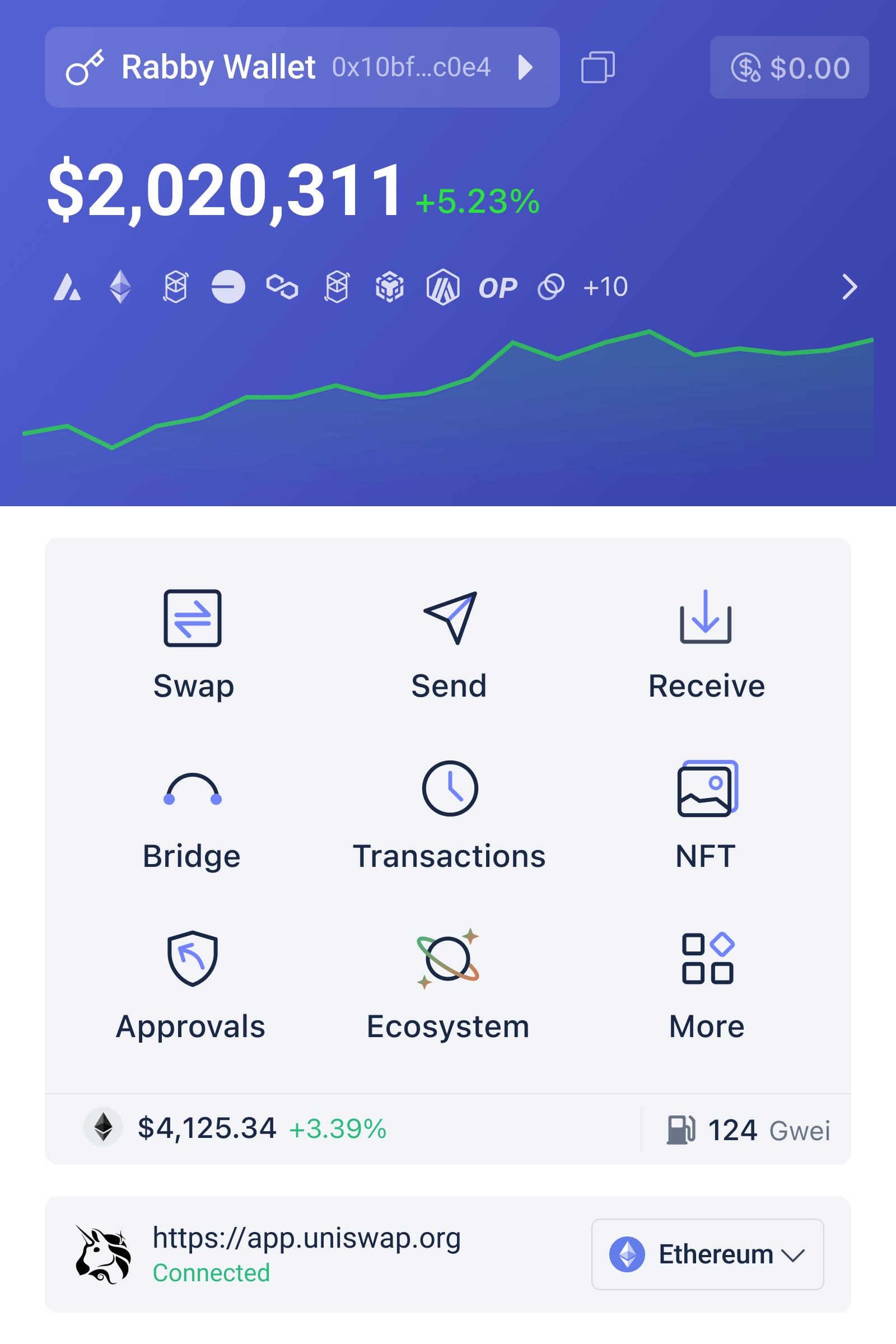
Rabby’s value in this setting is primarily contextual. A browser extension can help users see the network, recipient, contract interaction, and likely asset effect before signing. That is different from merely displaying a wallet address. For readers installing the extension, use the official project distribution path and verify the publisher and browser permissions before importing or connecting anything; the rabby extension download can serve as a starting point for locating the intended installation resource, but users should still perform their own authenticity checks.
Recent disclosure information shown through the Chrome Web Store also illustrates a broader point: wallet security includes data handling as well as smart-contract permissions. The store listing states that Rabby has disclosed information about collection and use of data, with further detail in the developer privacy policy. That disclosure does not by itself establish that a wallet is safe or unsafe. It signals that users should evaluate two separate surfaces: what the extension can observe or process, and what on-chain permissions their transactions create.
For US users, this separation is particularly practical because tax records, security reviews, and personal custody decisions often span several networks and applications. A wallet that groups assets visually may improve usability, but visual grouping can also hide the fact that each chain has its own transaction history and approval state. Before signing, confirm the active network rather than relying on the dapp’s branding or the appearance of the address.
A Reusable Approval-Review Framework
A useful review can be organized around four questions. First, who is the spender: the token contract, a router, a vault, or another protocol component? Second, what asset and chain are involved? Third, how large is the allowance relative to the value likely to remain in the wallet? Fourth, what is the exit plan if the protocol is abandoned or its behavior changes?
This framework reveals why “approve everything” and “revoke everything” are both incomplete strategies. The first ignores persistence and concentration of risk. The second may impose unnecessary fees and operational friction without improving safety when a protocol is actively used and carefully reviewed. A better policy might be to use limited approvals for unfamiliar or high-value interactions, retain narrowly scoped permissions for well-understood recurring activity, and conduct periodic reviews across every chain where the wallet has been active.
Transaction simulation and warning systems can improve the quality of a decision, but they have limits. A simulation reflects the state and assumptions available at the time; it cannot guarantee that a contract will behave identically later, nor can it resolve every upgrade, oracle, governance, or front-end risk. Warnings should be treated as evidence to investigate, not as a substitute for understanding. Conversely, the absence of a warning is not a certification of safety.
One non-obvious implication is that wallet hygiene should be proportional to future exposure, not just past activity. If a wallet once held a small amount but now contains a large balance, old approvals deserve renewed attention. The permission may be unchanged, while the potential loss has increased. Periodic review is therefore not merely housekeeping; it recalibrates old permissions against current financial conditions.
What to Watch as Wallet Interfaces Evolve
The likely direction of wallet design is toward more contextual permission management: clearer spender identities, chain-specific histories, transaction simulations, and controls that distinguish one-time from recurring authority. If these features become more reliable, users may make fewer blind approvals. Yet the underlying constraint remains: wallet software can explain a contract call, but it cannot fully determine whether a protocol’s economics, governance, upgrade authority, or business incentives will remain trustworthy.
The most durable practice is consequently layered. Install wallet software carefully, protect the recovery phrase offline, use a separate wallet for experimental dapps, inspect the network and spender before signing, and review approvals when a protocol is no longer needed. This does not remove DeFi risk. It changes risk from an invisible, accumulated condition into something the user can periodically measure and manage.
Frequently Asked Questions
Does disconnecting a dapp revoke token approvals?
No. Disconnecting usually changes the website connection in the wallet interface, while the allowance remains recorded by the token contract. To remove it, the user generally needs a separate revocation transaction on the relevant network.
Should every token approval be limited to zero or to the exact transaction amount?
Not necessarily. Exact or limited approvals can reduce potential exposure, but they require additional transactions and may create friction for recurring users. The appropriate choice depends on the protocol, the contract being approved, the asset value, and how often the wallet will interact with it.
Does Rabby protect users from malicious smart contracts?
No wallet can guarantee that protection. Rabby may provide transaction context and warnings that help users identify unusual requests, but users must still verify the site, network, spender, requested asset, and transaction outcome. A helpful interface reduces avoidable mistakes; it does not eliminate protocol or custody risk.
Why should approvals be reviewed on more than one chain?
Approvals are generally chain-specific. The same wallet address can have different allowances on different networks, so reviewing one chain does not establish that the wallet is clean everywhere. Multi-chain users should treat each active network as a separate permission environment.
Comments (0)